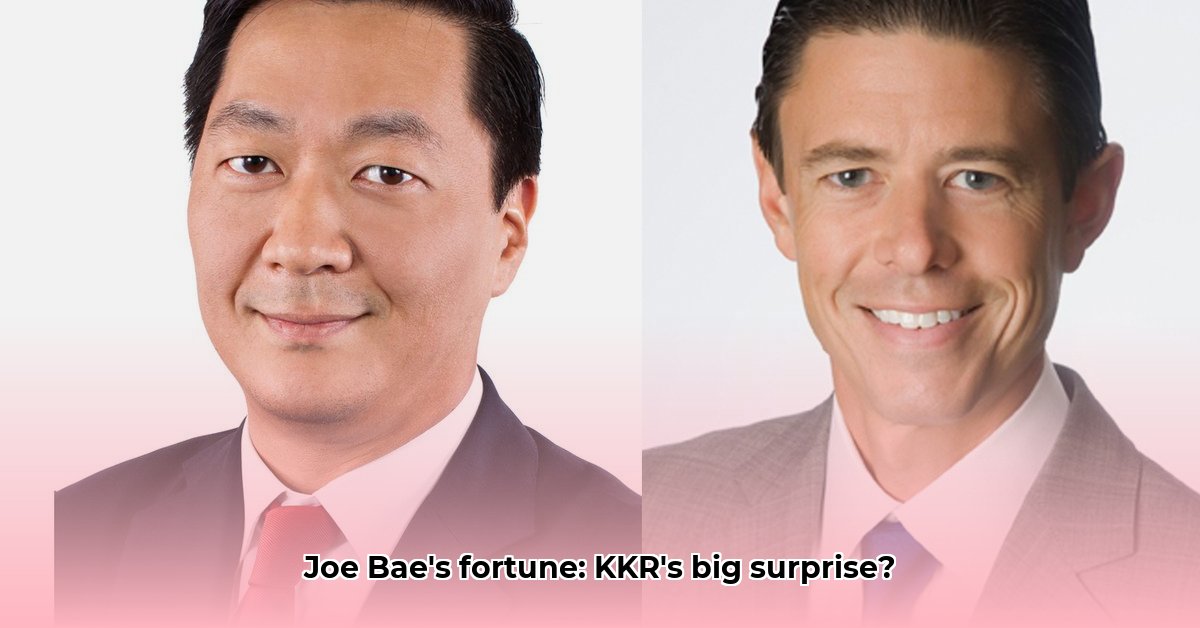
Joe Bae's ascension to co-CEO of KKR, alongside Scott Nuttall, marks a pivotal moment in the private equity giant's history and signifies a broader shift in industry governance. While the precise figure remains undisclosed, Bae's net worth is estimated in the hundreds of millions of dollars, reflecting his significant contributions and long tenure at the firm. For more on executive compensation, see this relevant example. This article explores the factors contributing to his wealth, the implications of KKR's leadership transition, and its impact on the private equity landscape.
KKR's Leadership Transition: A Generational Shift
The transition from founding partners Henry Kravis and George Roberts to Bae and Nuttall was not sudden but a carefully planned succession. Bae, a KKR veteran since 1996, steadily climbed the ranks, culminating in his promotion to co-president in 2017. This promotion, coupled with his subsequent appointment as co-CEO, came with substantial compensation packages, including significant stock options. News reports suggest that Bae and Nuttall each received compensation exceeding $120 million since 2017, significantly adding to their respective net worths. 1 While various sources offer estimates of Bae’s net worth, precise figures remain confidential, as KKR doesn't publicly disclose detailed executive compensation information.
How did Joe Bae amass such wealth? What is the driving force behind his financial success? A significant portion of his wealth likely originates from "carried interest" (a share of profits from successful investments), a common practice in private equity that rewards management for successful performance. Furthermore, his substantial stock options, granted during his career ascent, reflect KKR's growth and success under his tenure. But this is more than just a story of individual enrichment; it reflects wider trends in the industry.
The Impact on Stakeholders and the Private Equity Industry
KKR's leadership change has profound implications for a variety of stakeholders, both in the short and long term:
| Stakeholder | Short-Term Impact | Long-Term Impact |
|---|---|---|
| KKR Investors | Potential stock price fluctuations; adjustments to investment strategies | Long-term returns under new leadership; influence on future corporate policies |
| KKR Employees | Changes in corporate culture; potential adjustments to career paths | Advancement opportunities tied to company performance; shifts in work environment |
| Competing PE Firms | Re-evaluation of market strategies; adjustments to competitive dynamics | Altered competitive landscape; potential for new alliances and rivalries |
| Private Equity Industry | Setting precedence for leadership transitions; impacts perceptions of governance | Industry-wide discussions regarding best practices in leadership shifts and governance |
Isn't it fascinating how a single leadership change ripples through an entire industry? How will this transition affect investment strategies and KKR's competitive positioning in the long run? The answers to these questions are yet to fully unfold.
KKR's Governance Shift: A Move Towards Transparency?
KKR's transition is not solely about individual wealth; it's about corporate governance. The firm's plan to adopt a one-share, one-vote structure by 2026, moving away from its current dual-class share structure demonstrates a commitment to increased shareholder democracy and transparency. This shift is a significant departure from traditional private equity models and might influence the governance practices of other firms, signaling a growing trend towards more equitable shareholder representation in the private equity sector. Will this enhance investor confidence and attract new investment opportunities? Time will tell the ultimate impact of this change.
This forward-looking approach highlights a broader trend towards accountability and transparency within the private equity industry. KKR's decision to embrace a one-share, one-vote structure provides a case study for other private equity firms contemplating similar changes.
Conclusion: Joe Bae and the Future of Private Equity
While the exact figure of Joe Bae’s net worth remains uncertain, his story underscores the substantial financial rewards and broader influence of top-tier leadership within the private equity world. His ascent to co-CEO, alongside Scott Nuttall, signals not just a change in leadership at KKR but a fundamental shift in the industry's dynamics. It is a compelling narrative that will continue to unfold, shaping the future of private equity governance and leadership succession.